Composite vs uPVC Doors: 2026 Cost, Security & Which to Choose
25 September 2026
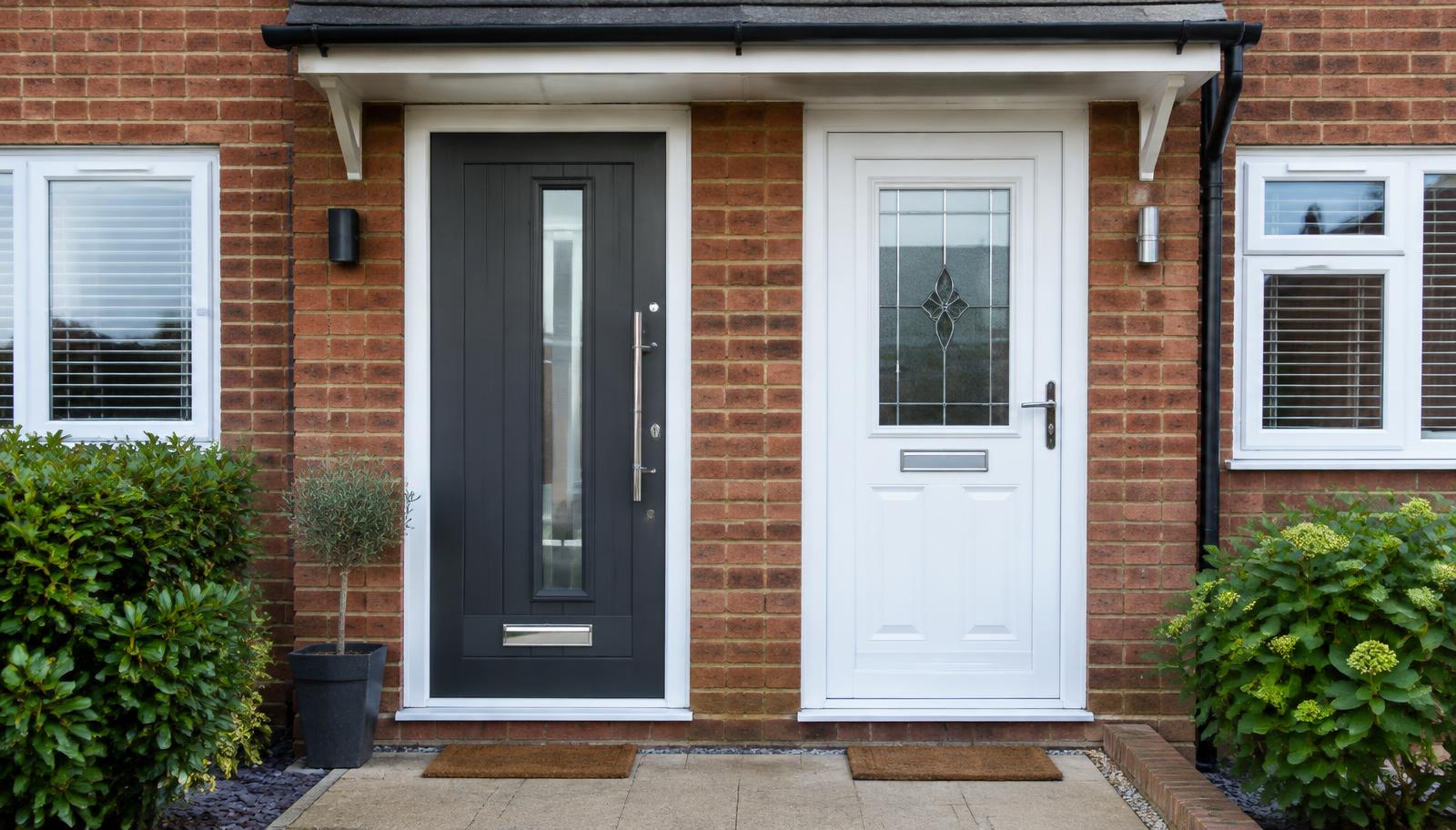
If you're replacing a front or back door, you'll hit this question within five minutes of looking: composite or uPVC? Both look smart, both are low maintenance, and both are far better than the draughty doors most of us are replacing. But they're not the same product, and the price gap is real.
This guide gives you straight answers on what a composite door costs in 2026, how it compares with uPVC on security, warmth and looks, and how to decide which one is right for your home.
The quick answer
- Choose composite for your front door if you want the most solid, secure feel, a realistic woodgrain look and a door that will still look sharp in 20 years.
- Choose uPVC if budget matters most, for a back or side door, or where you want lots of glass at the lowest price.
Plenty of Essex homeowners do both: a composite front door where it's seen and handled every day, and a uPVC back door where value counts more.
How much does a composite door cost in 2026?
Typical fully fitted prices, including VAT, removal of the old door and making good:
| Door type | Typical fitted price |
|---|---|
| uPVC front door | £850 to £1,300 |
| uPVC back door | £800 to £1,200 |
| Composite front door | £1,000 to £1,800 |
| Composite door with side panel | £1,600 to £2,600 |
| Composite stable door | £1,500 to £2,300 |
| uPVC French doors | £1,400 to £2,200 |
The spread comes from size, glass design, colour (inside and out), hardware and whether you add side panels or a toplight. A plain white uPVC door sits at the bottom of the range; a dual-colour composite door with a side panel and designer furniture sits at the top.
What's actually the difference?
What they're made of
A uPVC door is a uPVC frame with a uPVC panel, often reinforced with steel inside the frame. It's light, affordable and does the job well.
A composite door is built like a sandwich: a solid insulated core (usually timber or foam) wrapped in a tough GRP (glass-reinforced plastic) skin, typically around 44mm to 48mm thick. That's why a composite door feels so much heavier and more solid when you close it.
Security
This is the biggest practical difference. Both can be fitted with multi-point locking and anti-snap cylinders, and both should be. But the solid core and thicker slab of a composite door make it far harder to force than a hollow uPVC panel.
Whatever you choose, ask for:
- Multi-point locking (hooks and bolts along the full height of the door)
- A 3-star anti-snap cylinder, or a 1-star cylinder with 2-star handles
- Toughened or laminated glass
- Secured by Design accreditation if you want the police-backed standard
Warmth and energy efficiency
Both are big improvements on an old timber or early uPVC door. Composite doors usually edge it thanks to the insulated core, so they're a good choice for hallways that always feel cold. The fitting matters just as much, as a badly fitted door in any material will still be draughty.
Looks
uPVC has improved a lot, but it still looks like uPVC up close. Composite doors come with a realistic woodgrain texture and deep, even colours: anthracite grey, black, sage green, duck egg, red, cream and more, often with a different colour inside. If kerb appeal is the goal, composite wins.
Maintenance and lifespan
Neither needs painting. A wipe down a few times a year keeps both looking good. Composite skins hold their colour and resist dents better over time, and a quality composite door will typically last 30 years or more. A good uPVC door usually lasts 20 to 25 years.
Weight and wear
The extra weight of a composite door is a good thing for security, but it does need proper hinges and a correctly set-up frame. This is one area where the fitter really matters.
Composite vs uPVC at a glance
| Composite | uPVC | |
|---|---|---|
| Price | Higher | Lower |
| Security | Excellent | Good |
| Insulation | Excellent | Good |
| Looks | Realistic woodgrain, rich colours | Clean, simpler |
| Lifespan | 30+ years | 20 to 25 years |
| Best for | Front doors, kerb appeal | Back doors, tighter budgets |
Which one should you choose?
Ask yourself three questions:
- Is this the door visitors see? If yes, composite usually earns its extra cost.
- How much glass do you want? For a mostly glazed back door, uPVC gives you the most light for the least money.
- How long are you staying? If you plan to stay 10 years or more, the longer life and better security of composite tend to pay off.
Hidden costs to check on any door quote
- VAT included or not
- Removal and disposal of the old door
- Making good the plaster and render around the frame
- Threshold type (a low threshold may be needed for easy access)
- Letterbox, spyhole, knocker and handles: included or extra?
- Guarantee length, and whether it's insurance backed
Frequently asked questions
Are composite doors worth the extra money?
For a front door, usually yes. You get better security, better insulation and a door that keeps its looks for decades. For back doors, uPVC is often the better value.
How much does a composite front door cost fitted?
Most composite front doors cost £1,000 to £1,800 fully fitted in 2026. Side panels, toplights and premium hardware push the price higher.
Are uPVC doors secure?
A modern uPVC door with multi-point locking and an anti-snap cylinder is secure for most homes. A composite door is harder to force because of its solid core.
Do composite doors fade?
Good quality composite doors are UV stable and hold their colour very well. Very dark colours on south-facing doors can fade slightly over many years.
Do I need building regulations approval for a new door?
Replacement external doors need to meet building regulations for energy efficiency. A FENSA-registered installer handles this and gives you a certificate you'll need when you sell.
The bottom line
If it's your front door and you can stretch the budget, go composite. If it's a back door, or every pound counts, a good uPVC door fitted properly is a smart buy.
Want a real, itemised price? Get a free quote and we'll measure up, show you samples and give you a straight price with no sales theatre. You can also browse our front doors, back doors, French doors and full door range, or see our uPVC doors in Essex page.